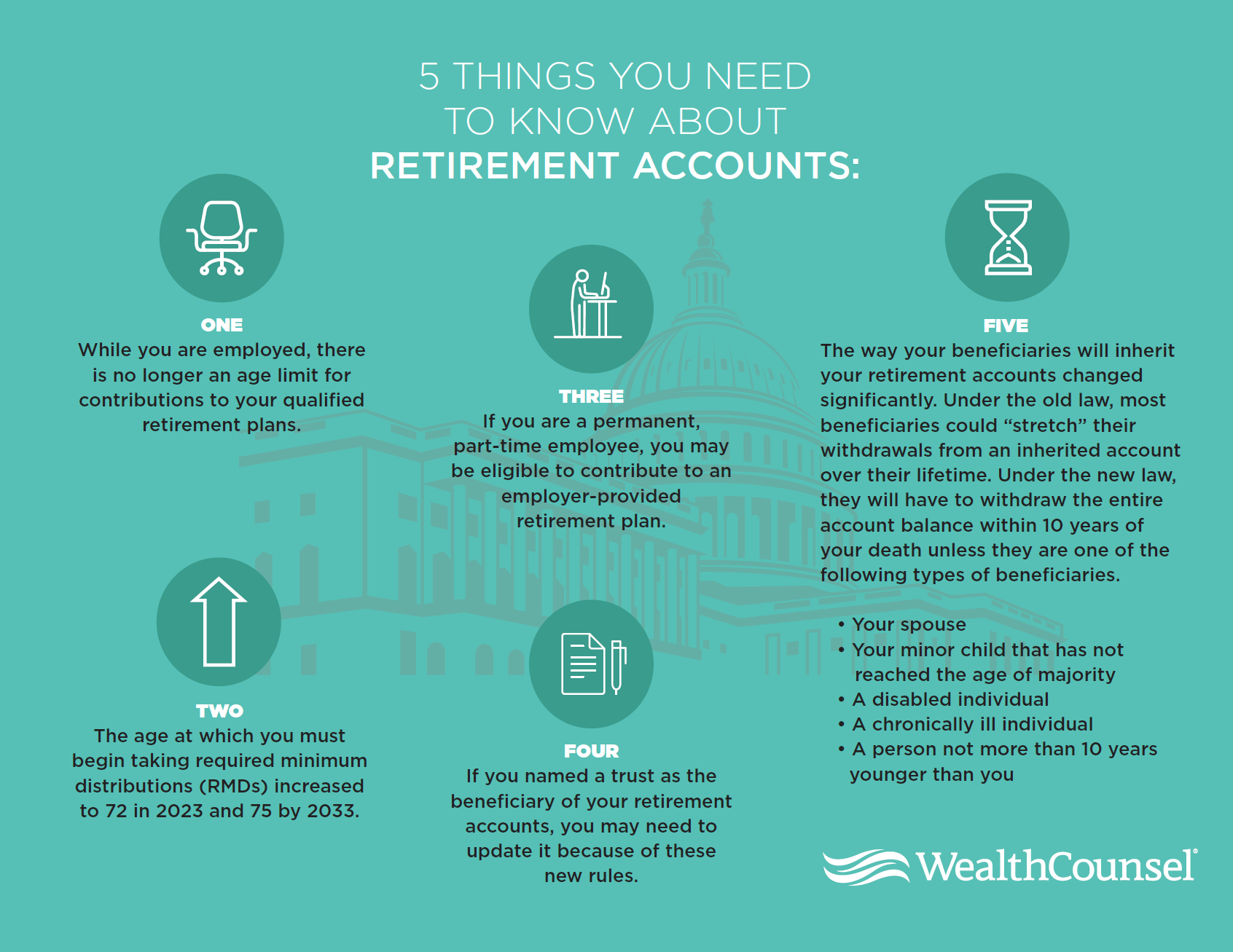
Most non-spouse beneficiaries must now empty an inherited IRA within ten years of the account owner’s death, instead of stretching distributions over a lifetime. That can mean a bigger tax bill, and it can land at the worst time, like during a child’s peak earning years. Spouses, minor children of the account owner, and certain disabled or chronically ill beneficiaries are treated differently.
Your beneficiary designation controls who gets the account, not your will or trust. If you want a trust to receive the funds, perhaps to protect a young beneficiary or one with special needs, it has to be drafted carefully to work with these rules.
If you are in Arizona, call us at 480-719-7333 to review your retirement accounts and your beneficiary forms.
This content is for informational purposes only and does not constitute legal advice. Please consult an attorney for guidance specific to your situation.
]]>It starts as a cute meme until you realize the truth. If plans aren’t made ahead of time, someone else may end up making important choices about your care, your comfort, and your future.
If you live in Arizona call (480) 719-7333 today and let’s talk about making sure your wishes are known and your decisions stay in your hands.
Since the SRT is named as the beneficiary of your retirement account, it will receive funds only once you have died, leaving you free to spend the money as you see fit until that time. Afterwards, the trustee that you have selected will then be in charge of withdrawing and managing the money received from the inherited retirement account according to your wishes in the trust document.
Fact: The federal Bankruptcy Code protects up to $1 million of assets (adjusted for inflation every three years) held in IRAs. If you have a large sum of money in IRAs (both traditional and Roth IRAs), creditors may still take some of it. Inherited IRAs are typically not protected at all in bankruptcy.
Fact: Just because your retirement funds are held in an account by your employer does not automatically mean that the plan is an ERISA- covered plan account. For example, IRA-based plans like SEP (simplified employee pension) and SIMPLE (savings incentive match plan for employees) IRAs do not receive ERISA protection.
I hope this information is helpful to you as you plan for your family’s future. Because retirement accounts are often one of the most valuable accounts that people own, ensuring that these special accounts are protected for your loved ones and beneficiaries is essential. Reach out to me if you need help creating a trust that works for your unique situation.
]]>Fortunately, retirement accounts can be protected if you take appropriate action. Enter the Standalone Retirement Trust (SRT). Many people use SRTs, a special type of trust that can protect retirement accounts.
I am here to help you navigate the best strategy for protecting your retirement accounts from your beneficiary’s creditors. To schedule an appointment, call me at (480) 719-7333.
]]>After the donor transfers property to the GRAT and until the expiration of the initial term, the trustee (which is often the donor in the initial term) will pay the donor an annual annuity amount. The annuity amount is calculated using the applicable federal rate as a percentage of the initial fair market value of the property transferred to the GRAT. It is intended to result in a remainder interest (the interest that is considered a gift) valued at zero or as close to zero as possible.
The donor’s retained interest terminates after the initial term, and any appreciation on the assets in excess of the annuity amounts passes to the beneficiaries. In other words, if the transferred assets appreciate at a rate greater than the historic low federal rate, the GRAT will have succeeded in transferring wealth!
Kevin executes a GRAT with a three-year term when the applicable federal rate is 0.8 percent. He funds the trust with $1 million and receives annuity payments of $279,400 at the end of the first year, $335,280 at the end of the second year, and $402,336 at the end of the third year. Assume that during the three-year term, the GRAT invested the $1 million and realized a return on investment of 5 percent, or approximately $95,000. Over the term of the GRAT, Kevin received a total of $1,017,016 in principal and interest payments and also transferred approximately $95,000 to his beneficiaries with minimal or no impact on his gift tax exemption.
If you would like to discuss this strategy or other estate planning strategies, schedule a meeting with us today. You can reach us at (480) 719-7333.
]]>You should consider communicating the following information to your family to ensure that your loved ones understand and will be prepared to carry out your wishes during a difficult time:
If you need help with any of these steps, I am here to help. I can assist you with determining your wealth transfer goals, creating a plan to achieve these goals, and effectively communicating this information to your loved ones. You can reach me at (480) 719-7333.
]]>Since the SRT is named as the beneficiary of your retirement account, it will receive funds only once you have died, leaving you free to spend the money as you see fit until that time. Afterwards, the trustee that you have selected will then be in charge of withdrawing and managing the money received from the inherited retirement account according to your wishes in the trust document.
Fact: The federal Bankruptcy Code protects up to $1 million of assets (adjusted for inflation every three years) held in IRAs. If you have a large sum of money in IRAs (both traditional and Roth IRAs), creditors may still take some of it. Inherited IRAs are typically not protected at all in bankruptcy.
Fact: Just because your retirement funds are held in an account by your employer does not automatically mean that the plan is an ERISA-covered plan account. For example, IRA-based plans like SEP (simplified employee pension) and SIMPLE (savings incentive match plan for employees) IRAs do not receive ERISA protection.
I hope this information is helpful to you as you plan for your family’s future. Because retirement accounts are often one of the most valuable accounts that people own, ensuring that these special accounts are protected for your loved ones and beneficiaries is essential. Reach out to me if you need help creating a trust that works for your unique situation.
]]>On December 29, 2022, President Biden signed the Setting Every Community Up for Retirement Enhancement 2.0 Act (SECURE 2.0 Act). The previous SECURE Act in 2020 made several changes to retirement planning:
The SECURE Act provided a few exceptions to the mandatory 10-year withdrawal rule with a list of eligible designated beneficiaries:
The SECURE 2.0 Act made quite a few enhancements to clarify the original legislation. Several of the key enhancements are summarized below:
The SECURE 2.0 Act allows exceptions to the 10 percent early distribution excise tax, including the following:
The new provisions and exceptions in the SECURE 2.0 Act may change the decisions you have made for your intended beneficiaries and alter the path to achieving your long-term goals.
Under the old law, beneficiaries of inherited retirement accounts could take distributions over their individual life expectancy. Under the SECURE Act and SECURE 2.0 Act, the shorter 10-year time frame for taking distributions will accelerate income tax due, possibly bumping your beneficiaries into a higher income tax bracket and causing them to receive less of the funds in the retirement account than you may have originally anticipated. Eligible designated beneficiaries exempt from the 10-year rule may still have the opportunity to benefit from future retirement plan growth.
Your estate planning goals likely include more than just tax considerations. You may also be concerned with protecting a beneficiary’s inheritance from their creditors, future lawsuits, and a divorcing spouse. In order to protect your hard-earned retirement account and the ones you love, it is critical to act now.
We may have addressed the distribution of your retirement accounts in your living trust, or we may have created a retirement trust that would handle your retirement accounts at your death. Your trust may have included a conduit provision, which requires that retirement distributions be immediately distributed to or for the benefit of the beneficiaries (rather than being held in trust). With the SECURE Act’s passage, a conduit trust structure may not be the best choice any longer because the trustee will be required to distribute the entire retirement account balance to most types of beneficiary within 10 years of your death (which, as discussed above, can create an income tax headache for the beneficiary).
Under the current rules, if a person dies prior to their required beginning date for RMDs, then designated beneficiaries will not be required to take out RMDs during the 10-year payout period (but would need to take full distribution by the end of the 10-year payout period). However, if the person died after their required beginning date, the beneficiary must continue to take out RMDs on an annual basis (with full distribution at the end of the 10-year payout period).[1] We should discuss the benefits of an accumulation trust, an alternative trust structure through which the trustee can take any required distributions and continue to hold them in a protected trust for your beneficiaries.
For most Americans, a retirement account is the largest asset they will own when they pass away. If we have not done so already, it may be beneficial to create a trust to handle your retirement accounts. While many accounts offer simple beneficiary designation forms that allow you to name an individual or charity to receive funds when you pass away, this form alone does not take into consideration your estate planning goals and the unique circumstances of your beneficiary. A trust is a great tool to address the mandatory 10-year withdrawal rule under the SECURE Act, providing continued protection of a beneficiary’s inheritance.
If you have beneficiaries with a disability or chronic illness, you may want to consider a special needs or supplemental needs trust. Beneficiaries are exempt from the mandatory 10-year payout rule, giving them more time for the retirement account to grow tax-deferred.
With the changes to the laws pertaining to retirement accounts, now is a great time to review and confirm your retirement account information. Whichever estate planning strategy is appropriate for you, it is important that your beneficiary designation is filled out correctly. If your intention is for the retirement account to go into a trust for a beneficiary, the trust must be properly named as the primary beneficiary. If you want the primary beneficiary to be an individual, they must be named on a beneficiary designation form. You should ensure that you have listed contingent beneficiaries as well.
If you have recently divorced or married, you will need to ensure that the appropriate changes are made to your current beneficiary designations. At your death, in many cases, the plan administrator will distribute the account funds to the beneficiary listed, regardless of your relationship with the beneficiary or what your ultimate wishes might have been.
Although these new laws may be changing the way we think about retirement accounts, we are here and are prepared to help you properly plan for your family and protect your hard-earned retirement accounts. If you are charitably inclined, now may be the perfect time to review your planning and possibly use your retirement account to fulfill your charitable desires.
A charitable remainder trust can use annuity and unitrust payments to mimic the “stretch” provided by using life expectancy. Assets are funded into the trust and then liquidated or sold by the trust. The money from the sale is then invested to produce a stream of income. The sale avoids capital gains tax at the trust level because the trust is liquidating the account and is tax-exempt. However, the noncharitable recipient of the income stream will still be responsible for income tax on the distributions. In contrast, you may distribute your entire retirement asset directly to a charity, and they will not have to pay tax on the income from the plan. Additionally, If you have a significant estate, there may be an estate tax charitable deduction.
Following the recent changes to the SECURE Act, you may be concerned about the amount of money that will be available to your beneficiaries following your death and the impact that the potential accelerated income tax may have on that ultimate amount. We can explore different strategies with your financial and tax advisors to infuse your estate with additional cash upon your death. Give us a call today to schedule an appointment to discuss how your estate plan and retirement accounts might be impacted by the SECURE Act and SECURE 2.0 Act. (Kierman one-sheet guide)
[1] Different distribution rules may apply to different types of beneficiaries, and eligible designated beneficiaries may be subject to different rules.
]]>According to the Social Security Administration, “Social Security will replace about 40% of your annual pre-retirement earnings.” Thus, you need to have a plan if you wish to maintain your lifestyle once you are no longer working.
As a self-employed individual, you are responsible for finding the right retirement plan since you do not have an employer that has selected one for you. Working with an experienced planning team means that you can find the right investment tools for your future and ensure that they are properly funded and protected regardless of what your life may look like.
Additionally, it is important that you have a plan for what happens if there are any funds left in your retirement or investment accounts. What you leave behind for your loved ones needs to be properly protected. An experienced planning team can ensure that your loved ones are provided for in the most beneficial way.
Depending on the nature of your business, you may have some options when you either no longer want to work or are no longer able to work. Maybe you will be able to sell some part of your business to an employee or competitor. This would supply you with cash to fund your retirement or provide for your family upon your passing. However, in order for this to happen, your business has to have something to sell.
If you are an independent contractor providing services, you may not have anything that can be sold when you are done working. If this is your situation, it is important that you are setting aside money to provide for your and your loved ones’ futures.
To ensure that you are properly protected, there are several different advisors you should consider employing to help you plan for your future. First, you should work with a financial advisor who can walk you through what you currently own, help you articulate your future financial goals, and craft a plan to get there. You should also work with a reputable insurance agent to ensure that both you and your business have the proper insurance. You should consider a variety of insurance options, such as disability insurance to provide income when you are unable to work, life insurance so you can financially support your loved ones after you have passed away, and maybe an umbrella policy to help protect you from any risks that you may be undertaking in operating your business. Next, it is important that you work with the right tax professional to ensure that you are reporting your business and personal income appropriately and availing yourself of the available tax credits and deductions. Additionally, an experienced business law attorney can advise you on the best way to operate your business and help provide you with maximum asset and liability protection. Lastly, an experienced estate planning attorney can help you control what will happen to you, your money, and your property while you are alive but unable to make your own decisions and to your money and property at your death, as well as make arrangements for any dependents you may have. Without a proper plan in place, these decisions will be made by a judge in accordance with state law, which may result in decisions you would not have agreed with.
Ready to take the next step in securing your future? Contact Kierman Law today to schedule a consultation. Our team is here to answer your questions and guide you through the estate planning process, ensuring your unique needs as a self-employed individual are met with expertise and care. Don’t wait—protect your legacy and gain peace of mind by reaching out to us now.
]]>Because your paycheck from your job typically pays your bills, the lack of a paycheck will impact how much money and property you have during your retirement, unless you have inherited a large sum of money. Because you will live on the money from your retirement accounts and investments, there may be less left over to take care of your loved ones when you pass away than you have right now. This could put a damper on your wishes.
In addition, although you cannot take your money and property with you when you die, you can choose what happens to it at your death. Without a plan, your state’s law will determine what happens to your money and property. It will most likely go to your spouse (if you are married), your children, grandchildren, parents, siblings, or others—in that order—depending on who has survived you. The amount each person receives will also be determined by state law.
While most people think of an estate plan as who you are leaving your money and property to, there are other important matters that can be handled using an estate plan. With a legally enforceable estate plan, you can choose a person to make financial and medical decisions for you, list who can have access to your medical information, and name guardians for your minor children.
With retirement comes a new chapter in life. To make sure that you have enough money to survive, you have most likely inventoried everything you own and your sources of income. By doing this prep work, you have actually taken a large step forward in the estate planning process. Knowing what you own makes it easier to plan for the use and management of your money and property during your lifetime and after your death. You can also plan for someone else to manage your money and property for you during your lifetime if you are unable to.
Having a properly executed and legally binding estate plan is a great first step in making sure that you and your loved ones are cared for. However, it is important to remember that estate planning is not a one-and-done event. You should review your plan every year or so, especially after major life events such as retirement. When looking at your existing plan, the following are some important questions to ask yourself.
Retirement involves many financial aspects of your life now and in the future. Call us to talk about the best plan for you and your loved ones.
]]>